
Home

Main navigation

  • home
  • slides
  • essays
  • articles
  • books
  • video
  • q & a
  • blog
Secondary menu
  • about us
    • scholars
    • privacy
    • support
    • image rights
    • credits
    • contact us
  • resources
  • see 6 slide essays ▶

Before the first real excavations at Harappa, there were the fragmented impressions of European visitors, strange seals in an unknown language, discussions in journals among mystified amateurs and archaeologists.

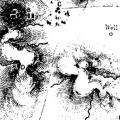
One trial excavation in a hundred years. The map above from the 1870s. More puzzles.

This series is the chronological record of the first signs that Harappa was an extraordinary archaeological site, from the original descriptions by Masson in 1825 to Daya Ram Sahni's inkling that something was worth investigating in 1917. In 1921 Sahni led the first excavations at Harappa. Three years later, the discovery of the ancient Indus civilization was announced to the world. What were the original pieces of evidence that put archaeologists on the path to this extraordinary discovery?

First Explorers: Charles Masson, 1829

Harappa.com

"A long march preceded our arrival at Haripah, through jangal of the closest description. East of the village was an abundance of luxuriant grass, where, along with many others, I went to allow my nag to graze. When I joined the camp I found it in front of the village and ruinous brick castle." >

John F. Fleet, 1912

"The place is now of no importance : but extensive ruins and mounds, one of which rises to the height of sixty feet, indicate that the case was otherwise in ancient times and it has yielded thousands of coins of the ‘‘ Indo-Scythians and their successors." >

Sir Alexander Burnes, 1831

"About fifty miles eastward of Toolumba, I passed inland for four miles to examine the ruins of an ancient city, called Harapa. The remains are extensive, and the place, which has been built of brick, is about three miles in circumference." >

Sir Alexander Cunningham, 1853-1873

"The ruins of Harapa are the most extensive of all the old sites along the banks of the Ravi. On the north, the west, and the south, there is a continuous line of mounds about 3,500 feet in length." >

M. Longworth Dames, 1884-1886

"Another seal, apparently in the same writing, was obtained on November 21st, 1884, by Mr. J. Harvey, Inspector of Schools, Multan. This seal is of a drab-coloured smooth stone, perfectly flat on the engraved side and rounded at the back." >

Daya Ram Sahni, 1917

"The ancient remains of Harappa in the Montgomery District are one of the most ancient and extensive city sites in the Punjab, but unfortunately they continue to be used as a quarry for building materials up till now. I hope to shortly approach the Government with a proposal for declaring these ruins as a protected monument . . ." >

© Harappa.com 1995-2026 31