

Research Today

The most impressive features are on the edges of the limestone plateaus, where dozens of quarries were grouped together. They are scattered over an area of 50 square km. A helium balloon was used to take hundreds of aerial photographs.
The photographs reveal the extensive historical exploitation of the largest flint source in South Asia. They also accomplish a second purpose.
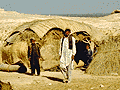
Many of the structures which had lain undisturbed for millenia are now being destroyed or damaged. These sites are currently extensively exploited by Baluchi workers as raw material for road construction.
The enormous scale of flint mining during Harappan times suggests complex systems of organization. Perhaps seasonal workers from Baluchistan worked the flint mines during the winter. Flaked cores and other debris testify to a sophisticated manufacturing process and the export of raw material.

A survey In February 1997 turned up several late Paleolithic workshops full of flint flakes and bladelet cores and other objects. The Acheulian workshop ZPS1 was excavated. The relationship of these Paleolithic materials to Indus artifacts remains to be understood.
Uses
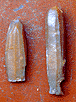
How was this flint used during the Indus Civilization? The earliest excavations at Mohenjo-daro turned up flint blades and cores in residences. They could have been used to start fire and prepare food. There is clear evidence for the use of flint in the manufacture of stone and shell jewelry and weights.
However, flint and its uses has typically been neglected by early excavators. A few hundred flint from Mohenjo-daro pale in comparison with the billions of flint flakes in the hills. Flint could have played a religious or ritual role (although contrary to common misconceptions, there is no real evidence for fire worship).
A great deal needs to be learned about the ancient use of flint. What is certain so far is that flint and associated enterprises must have been a major economic element of the Indus Valley period and earlier. Flint from the Rohri mines is also been found at the nearby pre-Indus Culture site of Kot Diji.
The Project

The Rohri Hills Project 1993-1998 was undertaken to start answering some of these questions. The investigation of the flint quarries is really only just beginning. The aim is to learn more about the unknown internal flint trade in the ancient Indus Valley.
The results will also greatly increase our knowledge of the earliest human industrial activities. The presence of Paleolithic workshops from different periods indicates that the production of flint played a role in the early development of the human species, as well the birth of the first nearby cities like Kot Diji and Mohenjo-daro.