Home

Main navigation

  • home
  • slides
  • essays
  • articles
  • books
  • video
  • q & a
  • blog
Secondary menu
  • about us
    • scholars
    • privacy
    • support
    • image rights
    • credits
    • contact us
  • resources
  • see 3 slide essays ▶

Essays on the raw materials collected and excavated from the Rohri Flint mines and quarries north of the Indus Valley and Indus River.

The Rohri Flint Quarries

Paolo Biagi

The largest archaeological site in the subcontinent goes back hundreds of thousands of years to some of the earliest uses of fire. William Blandford reported the presence of flint cores and flakes in the hills near Sukkur and Rohri on the Indus River in 1880. In 1939, the geologists De Terra and Paterson suggested that some of the flint tools resembled those found in Mohenj… >

The Rohri Flint Quarries

Paolo Biagi

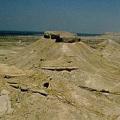
Research Today The most impressive features are on the edges of the limestone plateaus, where dozens of quarries were grouped together. They are scattered over an area of 50 square km. A helium balloon was used to take hundreds of aerial photographs. The photographs reveal the extensive historical exploitation of the largest flint source in South Asia. They also accompl… >

The Rohri Flint Quarries

Paolo Biagi

Objectives The Rohri Hills Project is jointly run by the Department of Archaeology, The Shah Abdul Latif University, Khairpur, Sindh, Pakistan and the Department of Historical, Archaeological and Oriental Sciences at the University of Venice in Italy. Project Directors are Prof. M. Mukhtiar Kazi (Director-Archaeologist) and the author, Dr. Paolo Biagi (Co-Director-Archaeologi… >

© Harappa.com 1995-2026 31