Home

Main navigation

  • home
  • slides
  • essays
  • articles
  • books
  • video
  • q & a
  • blog
Secondary menu
  • about us
    • scholars
    • privacy
    • support
    • image rights
    • credits
    • contact us
  • resources

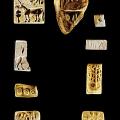
Ancient Indus Valley civilization sealings (the positive impressions made from seals).

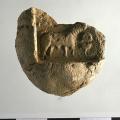
Seal impression

This Early Harappan seal impression or sealing of a square seal has several script signs and two ladder like motifs (Kot Diji Phase, c. 2800 BCE). The wet clay was probably placed on a bundle of goods to seal it and then was broken off when the bund… >

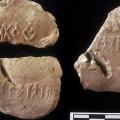
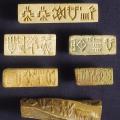
Three clay sealings

Three clay sealings from the Harappa Phase levels (2600-1900 BCE) that may have come from large bundles of goods shipped to the site from a distant region. The clay does not appear to be the same type of clay as found near Harappa and each sealing h… >

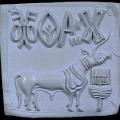
Unicorn sealing

Low fired sealing in terra cotta of a unicorn seal from the Trench 54 area (H2000-4453/2174-192). This type of clay sealing was used to seal bundles of goods for transport. >

Sealing

Seals were used to make a sealing, or positive imprint, like this modern resin one made from the original seal. Sealings were used in ancient times for trade. They would be made on ceramics or the clay tags used to seal the rope around bundles of go… >

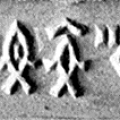
Sealing

One of the longer inscriptions made from a seal found during Mackay's excavations between 1927-1931 in Mohenjo-daro (D.K. 9134). There are few long Indus inscriptions; another similarly long inscription was recently found on a wooden signboard in Dh… >

Ancient Indus seals and sealings

Ancient Indus seals and sealings found at Gola Dhoro, Begasra. >

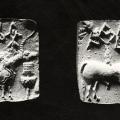
Two Unicorn Sealings from Harappa

These two sealings are labelled 1917-1920 in the ASI archives. They come from Punjab volume 26, earlier than the full 1921 excavation images which were in volumes 27 and 28. Why 1917? In the absence of more information it is hard to say much except … >

Inscribed objects

A collection of inscribed objects found along the main street leading to the southern gateway of Mound E at Harappa. The fragmentary seal on the left is the earliest seal found to date, and depicts a bovine carved in a very archaic style. At the top… >

Seals and sealing

Long rectangular seals and a terra cotta sealing (bottom) with Indus script. The top seal has seven signs of Indus script. The back of this seal is convex and it is perforated from the side. The central sign may represent a house or temple and is a … >

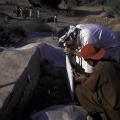
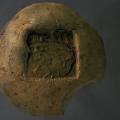
Sealing find

One of the most exciting discoveries of the 1998 excavation season was finding a seal impression or sealing in a hearth of the Early Harappan Period (Kot Diji Phase, circa 2800 BCE). Here William Belcher is seen photographing the important discovery… >

© Harappa.com 1995-2026 31