Geography and Chronology (cont.) The next Era is called the Integration Era (2600-1900 BCE) and is the time generally associated with the term "Indus Valley civilization". This Era is characterized by the emergence of numerous urban centers and smaller regional towns. At this time we see the common use of a writing system found primarily on pottery or on inscribed seals an… >
Regionalization Era: Art and Symbol The virtual explosion in material culture during this Era makes it impossible to discuss all of the relevant data and it is only possible to focus on a few of the major types of artifacts in the core areas of the Indus Valley. During the Regionalization Era, or Early Harappan period (ca. 5500 to 2600 BCE), scattered agro-pastoral settle… >
Regionalization Era: Art and Symbol (cont.) The manufacture of seals shows a dramatic change during the later part of the Early Harappan or Kot Diji Phase. The early button seals made of carved bone from the Ravi phase (Meadow, Kenoyer and Wright 1998) are replaced with carved soapstone or steatite seals having geometric incised designs (Meadow, Kenoyer and Wright 1996… >
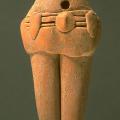
Regionalization Era: Art and Symbol (cont.) At Harappa, terracotta animal and human figurines become more common during the Kot Diji Phase and some of them have been found painted black or red designs. Some of the bull figurines have painted bands and stripes on their legs and hump (Figure 5). Figure 5. Harappa: Ravi and Kot Diji Phase Animal Figurines. 1. Ter… >
Conclusion On the basis of this brief review it is possible to conclude that some craft technologies came to be associated with status, symbol and power in the Indus valley while others remained basically utilitarian. During the Early Food Producing Era, most of the ornaments and symbolic objects appear to have been brought to the site of Mehrgarh as finished objects. In… >