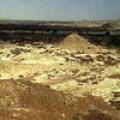
The recent evidence from Mohenjo-daro of a "Kot Dijian" layer beneath its Indus ruins, including the city wall, dating from 2600 BCE or earlier, brings renewed interest to this precursor culture to the Indus civilization. >
The paper's central argument is straightforward and important: the wheeled bullock cart of the Indus Valley was an indigenous invention, not a technology diffused from Mesopotamia or Central Asia, as earlier colonial-era scholars once assumed. >
This is a deeply researched and satisfying book, one that takes on the insightful point made by Marshall: "Great cities with teeming populations like Mohenjo-daro and Harappa could never have come into being save in a country which was capable of producing food on a big scale." >
About 60 kilometers north-west of Gwadar, close to the Makran Militia post at Suntsar, lie the ruins of an enigmatic settlement that goes by the present-day appellation of Sutkagen Dor (burnt mound). Dasht River which flows nearby, discharges into the Arabian Sea next to the Pak-Iran border. A 400-km long stretch of low sedimentary rock running east-west, known as the Makran C… >
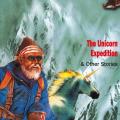
"I saw a herd of unicorns today. I write this in full possession of my sense." So begins the short story The Unicorn Expedition by the great Bengali filmmaker Satyajit Ray. featuring a Professor Shanku story. >
An excellent video, by a key thinker about the ancient Indus civilization with wide-ranging experience in neighbouring cultures. This talk was given in Chennai as the Iravatham Mahadevan Endowment Lecture on February 25, 2026. >