

“The photographer will point his camera at each pinnacled niche or floriated doorway, he will take his sun painted sketch of each figured corbel or grotesque gargoyle; and in fact carry away in his portfolio every nice architectural detail long before time with his destructive hands shall have the opportunity to mar any more of the beauty of the original.”
Introduction
Seminar on the History of Photography, Courtauld Institute of Art, London, 22 February 2006
 Extolling the virtues of photography in May 1860, Reverend Stratham, the President of the South London Photographic Society, had enthusiastically declared that:
(‘On the Application of Photography to Scientific Pursuits’, British Journal of Photography, July 2, 1860, p. 191–2).
Photography’s launch coincides with the beginnings of what we may refer to as archaeological investigations––a scholarship built essentially on field surveys, and involving the unearthing, recording, and researching of historical artefacts. In fact, Stratham, through his praise for photography, may as well have extolled the virtues of nineteenth-century archaeological work. For, just as photography, the nascent science of archaeology was also perceived as providing the means of establishing, sorting, and storing objective records of the past, whose physical traces on the contemporary landscape was increasingly feared threatened with extermination.
My research on the history of archaeological photography feeds on a broader intellectual concern– on the historiography of representation. What has directed this research until now is the shared episteme that grounds the making of photographic and archaeological evidence. Archaeological and photographic representations are, even today, mostly perceived on very similar terms. They are considered as being self-revelatory, reckoned as comparatively objective recording techniques, and often summoned as witnesses for verifying knowledge formation processes. Yet, the historiography of archaeological representations alerts us to the epistemic shifts through which ‘evidence’ gets constituted differently at different points of time, and the instrumentality of the representations within these shifts breaks all possibilities of according them with ‘fixed’ meanings. The tropes of empiricism within which we often find ourselves unwittingly bound, while selecting information, usually masks the potency of photographs taken during archaeological fieldwork as historical and material objects to think with.
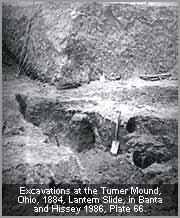
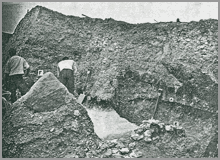 Photography became an easier and cheaper technology to use from the 1860's, a period that also heralded within the Anglo American world an awareness for the need of systematic archaeological excavations. By the mid-1880's many excavators of archaeological sites, such as Henry Ward Putnam (then Director of the Peabody Museum, Harvard) and General Augustus Henry Lane Fox Pitt Rivers (subsequently of the Excavations at Cranborne Chase fame), had begun to voice what later became a common dictum, that to dig was to destroy. Photography not only allowed these nineteenth century excavators to create what they reckoned were records (Figures 1 and 2), but progressive developments within the photographic technology from the 1860's until the 1880's also made it possible for them to appropriate photography as a distinct field methodology through which their investigations could be judged scientific.