Home

Main navigation

  • home
  • slides
  • essays
  • articles
  • books
  • video
  • q & a
  • blog
Secondary menu
  • about us
    • scholars
    • privacy
    • support
    • image rights
    • credits
    • contact us
  • resources

Ancient Indus civilization steatite objects.

Steatite beads

These tiny steatite beads were found in the Harappan cemetery and come from an elaborate hair ornament worn by a male individual. Each bead is less than .01 cm long and less than .01 cm diameter. A human hair is shown to give an idea of the minute s… >

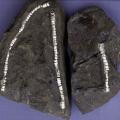
Steatite bead necklace

Fragments of a steatite bead necklace recovered from the floor of a house dating to the Ravi Phase (circa 3100 BCE, see 9). The beads have been fired and glazed. >

Steatite sheets

Thin sheets of steatite sawn from this blocklet found in Trench 54 would have been broken into small discs and then perforated. >

Indus steatite tablets

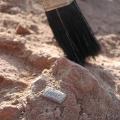
Fragile steatite tablets are exposed under the skilled hands of trained excavators using small pointed bamboo sticks and brushes. >

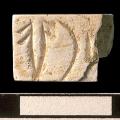
A broken steatite tablet

A broken steatite tablet (H97-3431/7615-01) was recovered from deposits just below the fired brick revetment of the "granary" platform and dates to Harappa Period 3B (2450-2200 BC). >

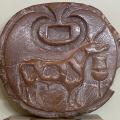
Harappan Pendant

Among the most unique of ancient Indus objects, it inspired Dr. Kenoyer to surmise that "perhaps the most intriguing aspects of the ancient Indus culture are the religion and politics, which appear to have been closely intertwined." >

Monkey Figurine

Another example where Indus craftsmen are able to imbue a tiny figurine with indelible character. Marshall wrote (Mohenjo-daro, pp. 351): "No 13 (DK 2091), which is 1.5 inches high, is a delightful little figure of a monkey squatting with hand… >

© Harappa.com 1995-2026 31