Home

Main navigation

  • home
  • slides
  • essays
  • articles
  • books
  • video
  • q & a
  • blog
Secondary menu
  • about us
    • scholars
    • privacy
    • support
    • image rights
    • credits
    • contact us
  • resources

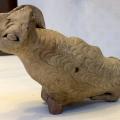
Ram figurines and motifs in the ancient Indus civilization.

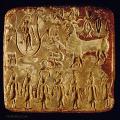
Seal, Mohenjo-daro

Seal depicting a deity with horned headdress and bangles on both arms, standing in a pipal (sacred fig) tree and looking down on a kneeling worshiper. A human head rests on a small stool. A giant ram and seven figures in procession complete the narr… >

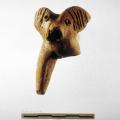
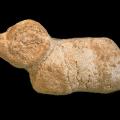
Ram figurine

Terra cotta ram figurine from Harappa. Such figurines may represent sacrificial animals used in specific annual rituals. Harappa Archaeological Research Project. >

A small faience ram amulet

A small faience ram amulet recovered from the fill associated with the southwestern edge of the "granary" platform. (Trench 41SW, H97-3434/7650-01, Length = 21.8 mm) >

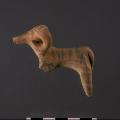
Ram figurine from Harappa

Ram figurines are identified by their large curled horns. Some have incised horns and/or muzzles like the water buffalo figurines and are only distinguished by the curvature of the horns. Approximate height (length): 6.0 cm. >

Ram figurine with painted designs from Harappa

The ram figurines are also sometimes decorated with black stripes and patterns. Some may be painted black. Occasionally, incised "wool" is depicted on the bodies of sheep figurines. Approximate dimensions (W x H(L) x D): 3.3 x 6.6 x 6.3 cm. >

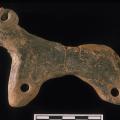
Wheeled ram figurine from Harappa

One type of wheeled figurine has lateral holes for the axles through the ends of the legs. Approximate dimensions (W x H(L) x D): 3.6 x 11.0 x 7.5 cm. >

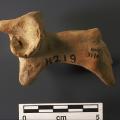
Ram Figurine

Dr. Kenoyer writes (Ancient Cities, p. 164) referring to this ram figurine that domestic goats were "kept in cities, where they were used for meat and diary products, as well as for wool or goat's hair," and (p. 227): "Hollow, seated ram figurine… >

© Harappa.com 1995-2026 31