Home

Main navigation

  • home
  • slides
  • essays
  • articles
  • books
  • video
  • q & a
  • blog
Secondary menu
  • about us
    • scholars
    • privacy
    • support
    • image rights
    • credits
    • contact us
  • resources

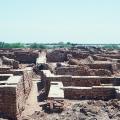
Ancient Indus civilization latrines and related discoveries.

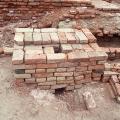
Toilet, HR area

  • Mohenjo-daro, Toilet, HR area

Toilets would have been an essential feature in Mohenjo-daro, but the early excavators identified most toilets as post-cremation burial urns or sump pots. This brick structure (one of two - see Slide 48) had a hole in the top that was connected to a… >

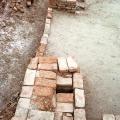
Toilets, HR area

  • Mohenjo-daro, Toilets, HR area

Two structure with a hole and drain located are thought to have been toilets. While these two structures may have been unique examples of toilets, most people would have used old pots set into the ground as commodes. >

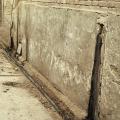
HR area, corbelled arch drain

  • Mohenjo-daro, HR area, corbelled arch drain

Many large covered drains were constructed with corbelled arches. These drains ran beneath streets and lanes and were large enough for workmen to enter and clear any obstructions. >

Modern Latrine Drain at Harappa town

  • Mohenjo-daro, Modern Latrine Drain at Harappa town

Latrines located inside a courtyard of modern Harappa town have drains that fall directly into the open street drain. (See Indus 1, Slide 12 for an ancient bathing platform.) >

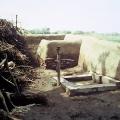
Bathing area and latrine in Harappa town

  • Mohenjo-daro, Bathing area and latrine in Harappa town

The bathing areas and walled latrine are located on the interior edge of the courtyard that touches the street. The drain from the bathinga area runs through the wall and falls directly into the street drain. Piles of firewood and an inverted cookin… >

© Harappa.com 1995-2026 31