Home

Main navigation

  • home
  • slides
  • essays
  • articles
  • books
  • video
  • q & a
  • blog
Secondary menu
  • about us
    • scholars
    • privacy
    • support
    • image rights
    • credits
    • contact us
  • resources

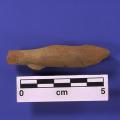
Fish objects and signs from ancient Indus Civilization sites.

Fish Bone/Wallago Attu Mandible/Dentary in Situ at Harappa

In the early 1990s, I was a new graduate student in the Department of Anthropology at the University of Wisconsin-Madison. In order to prepare myself for taking my qualifying exams, I was sitting in on Dr. J. Mark Kenoyer’s class, The Archaeology o… >

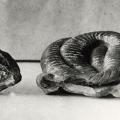
Terracotta animals and miscellaneous objects

Four terracotta animal figures in a row. Left: possibly an armadillo, find no. Ab 923, found in Mound F in the parallel wall area, and which is published in Vats 1940 (Vol. II) Pl. LXXVII no. 26, and described by Vats: “No. 26 (Ab923) is a fine … >

Environments – Satellite Image from Google

The aquatic environments around Harappa are riverine and composed of marshlands, oxbow lakes, and the River Ravi itself. Each of these areas represented a specific environment in which fish and many other types of aquatic life could be harvested, i… >

Various Carp, Family Cyprinidae

Carp represent one of the most ubiquitous fish in the Ravi and its surrounding environs. However, many of the indigenous species have been overtaken by an introduced species from China – the so-called grass carp (Cyprio carpus). However, carp is a… >

Mystus Aor, Catfish, Family Siluridae

The following slides are related to certain species of riverine catfish, including the families Siluridae, Bagridae, and Sisoridae. Many of these catfish grow to in excess of 2 meters in length and would have provided a substantial portion of anima… >

Wallago Attu, Catfish, Family Siluridae

Fish figurine from Harappa

Another aquatic creature represented in the figurine corpus of Harappa is the fish, which has applied fins, incised gills, and a vertical hole through the center of its body. Like the gharial, the fish is also a common motif on tablets as well as in… >

Bagarius Bagarius Catfish, Family Sisoridae

While this fish is common in the archaeological deposits, Wallago attu and Rita rita are the most common. However, this fish, locally known as Goonch is one of the largest catfish known in Asia. It is so large that it’s “whiskers” ossify and form … >

Polychrome Nal pottery

Polychrome Nal pottery from Niai Buthi (from Tr. II-8 and surface). >

Spiny Eels, Family Mastacembelidae

Spiny eels are relatively uncommon in the archaeological record and within the general diet of the Punjabi folk. These fish also can survive in extremely environments in soft mud with little water. >

Pagination

  • Page 1
  • Page 2
  • Page 3
  • Next page
  • Last page
© Harappa.com 1995-2026 31