Home

Main navigation

  • home
  • slides
  • essays
  • articles
  • books
  • video
  • q & a
  • blog
Secondary menu
  • about us
    • scholars
    • privacy
    • support
    • image rights
    • credits
    • contact us
  • resources

Faience related objects, finds and related materials from ancient Indus sites.

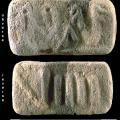
Faience tablet

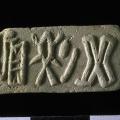
Faience tablet (H2001-5082/2920-02) made from two colors of faience was found eroding from the Trench 54 South workshop area. Identical tablets made from two colors of faience were recovered in Area J, at the south end of Mound AB, in the excavation… >

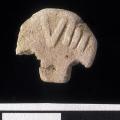
Molded faience tablet

Fan-shaped molded faience tablet found on the eroded slope south of the Trench 54 South workshop. It was probably made using the steatite mold found in the workshop (Slide 64). >

Faience ornaments

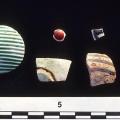
A collection of faience ornaments from Harappa. The Harappans developed a very compact glassy faience that was produced in a variety of colors, ranging from white, to blue green, deep blue and even red-brown. On the left is a disc shaped ornament of… >

Tablet with script

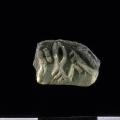
Mold-made faience tablet with script found in the eroded surface debris of Trench 54 (H2000-4484/2227-15). >

Faience cloven hoof

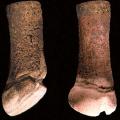
Tiny cloven hoof made of two-color faience probably from a composite figurine. This cloven hoof could represent any number of animals, but the most common in the Harappan artistic repertoire are cattle and water buffalo (H2000-4440/2121-90, Mound E,… >

Unique two colored tablet

This uniquely shaped tablet (H2001-5090/2913-09), also made with two colors of faience, has an inscription similar to that seen on the previous slide (67). This tablet was found inside the workshop in Trench 54 South. >

Grindstone and pestle

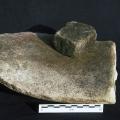
A concave grindstone and angular pestle found in a room adjacent to the Trench 54 South workshop may have been used for grinding faience paste. >

Broken canisters

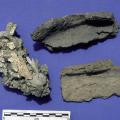
Broken canisters, often with glassy vitrified surfaces, were found throughout the Trench 54 South workshop debris. Lumps of frothy faience slag with embedded fragments of bone were also quite common in the debris. >

Glazing faience

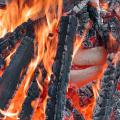
In order to glaze faience it must be fired at approximately 940 degrees Celsius for several hours. The red color of the glowing faience barely visible inside the canister indicates that this temperature has been reached. This was confirmed by using … >

Glazed faience tablets

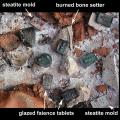
Fully and partially glazed faience tablets and other fired objects could be examined after the fire had cooled and the canister opened. The steatite molds were also included in the canister to see how they would be affected by this type of firing. >

Pagination

  • Page 1
  • Page 2
  • Next page
  • Last page
© Harappa.com 1995-2026 31