Home

Main navigation

  • home
  • slides
  • essays
  • articles
  • books
  • video
  • q & a
  • blog
Secondary menu
  • about us
    • scholars
    • privacy
    • support
    • image rights
    • credits
    • contact us
  • resources

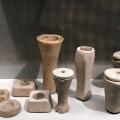
Oil Lamps and Small Pots

A variety of oil lamps and small pots made of alabaster, as described in the Guimet's caption, were discovered at Mundigak. Alabaster is a soft stone, typically light in color, translucent and easy to work with. According to Allchin, Ball and Hammo… >

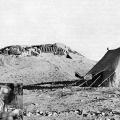
Mundigak Mound and Tent

"The whole district was known as Kar Karez and the track eventually took us through a village called Mundigak, the name Jean-Marie had borrowed for the mound. High mud-brick walls, square, flat-roofed houses, all skirting the grey gravel of the rive… >

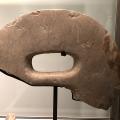
Broken Round Object

A stone object of unknown purpose from Mundigak. There seem to have been two similar rounded open areas in the center of the circle. >

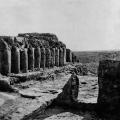
Mundigak Palace

A decade later, after excavating the pre-Indus site of Amri in Sindh, Jean-Marie Casal published the book La Civilisation d l'Indus et ses enigmes [The Indus Civilization and its Puzzles] (1969). In the section Mundigak becomes … >

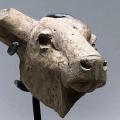
Bull's head

Jean-Marie Casal writes "Note also that, during their occupation, the first occupants of Mundigak [which he thought were nomads around 4500 BCE, but now is dated more towards 4000 BCE] already how to make use of copper, the evidence for which was th… >

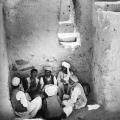
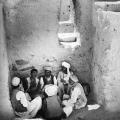
Mundigak Houses

Sylvia Matheson captioned the above photograph: "Shade from the thick, mud-brick walls (which were on stone foundations) excavated in the residential quarter on Mound B provides welcomes relief from the sun's heat during the midday meal. The large o… >

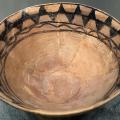
Painted Bowl

A Mundigak III (3400-2900 BCE) bowl. J.F. Jarrige writes in The Early Architectural Traditions of Greater Indus as Seen from Mehrgarh, Baluchistan "Work conducted at Mehrgarh has clearly shown that the cultural assemblage of the preurban phases … >

Mundigak Palace

Original caption by Sylvia Matheson: Shade from the thick, mud-brick walls (which were on stone foundations) excavated in the residential quarter on Mound B provides welcomes relief from the sun's heat during the midday meal. The la… >

Vase

Painted pottery from Mundigak IV, dated from approximately 2900-2400 BCE. Casal called it "pottery with geometric decoration." The design is beautiful and alive, of a style current since Neolithic times in western Asia and South Asia, and might evok… >

Pot Discovery

"Ebrahim uncovered a large storage jar on his side of the balk, set at the same level as mine, in the angle of a landing at the top of a little staircase. And what ajar! It was the only one of its size and shape found on the dig and it was decorated… >

Pagination

  • Page 1
  • Page 2
  • Page 3
  • Page 4
  • Next page
  • Last page
© Harappa.com 1995-2026 31