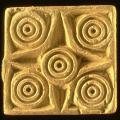
The Harappa Archaeological Research Project's excavations at Harappa have yielded new troves of information about ancient Indus life, craft production, and preceding cultures like the Ravi Phase. >
Ravi Phase and Kot Diji Phase Occupations On the northern part of Mound AB (Figure 1) excavations in 1996 were undertaken in both the Ravi (Hakra) Phase (Period 1: 3300-2800 BCE) and the Kot Diji Phase (Period 2: 2800-2600 BCE) occupation levels. In 1998 - 2000 a much larger horizontal exposure was made of both Ravi and Kot Diji levels. During the Ravi and Kot Diji Phases v… >
Harappa Phase Occupation: Chronology and Fortification Wall Since 1986, excavations of the Harappa Phase occupations (2600-1900 BCE), have been conducted on all of the major mounds and in low lying areas between the mounds and along their peripheries (Figure 1). On the basis of these studies, it is possible to determine the overall size of the city at over 150 hectares and … >
Harappa Phase Occupation: Granary or Great Hall One of the most famous buildings at Harappa is the so-called "Great Granary" (Trench II) that was first excavated under the supervision of Rai Bahadur Daya Ram Sahni and Madho Sarup Vats between 1921 and 1929 (Vats 1940). Excavations during three seasons (1997 to 1999) were undertaken at three corners of the "granary" or Great… >
Harappa Phase Occupation: Circular Working Platforms and Mound E, Southwest The circular working platforms located to the south of the "granary" or Great Hall are also among the best known features at Harappa. During his excavations, Vats identified 17 circular brick platforms (Vats 1940:19ff) and in 1946 Wheeler excavated an 18th example (Wheeler 1947). Earlier interpretat… >
Late Harappa Phase, Conclusion, and References Harappa is perhaps the only urban center where it has been possible to trace the transition from the Harappan to the Late Harappan (Cemetery H) period. Most of our information on this period comes from early excavations in Cemetery H (Vats 1940) and from disturbed occupation deposits containing fragmentary walls, drains, and p… >